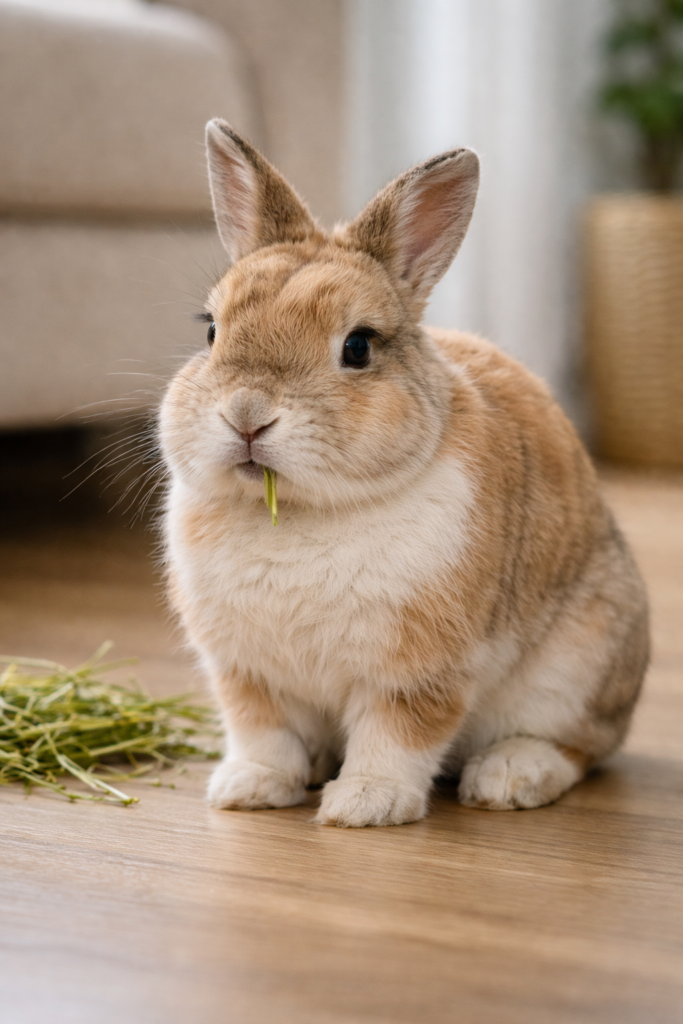

Rabbits are very good at hiding pain. That’s part of their natural instinct — in the wild, showing weakness can make them a target. Because of that, dental problems in rabbits often go unnoticed until they become serious.
If your rabbit suddenly stops eating, drops food, or seems “off,” their teeth may be the reason. Dental issues are one of the most common and most dangerous health problems in rabbits. The earlier you spot the signs, the better the outcome.
Let’s go through what rabbit teeth problems look like, why they happen, and when you should act.
Why Rabbit Teeth Problems Are So Common
Unlike many other pets, a rabbit’s teeth never stop growing. Their incisors (front teeth) and molars (back teeth) grow continuously throughout their life.
In nature, constant chewing on fibrous plants keeps teeth worn down. In captivity, even small diet or jaw issues can lead to overgrowth — and once teeth become misaligned, problems can escalate quickly.
Early Signs of Rabbit Teeth Problems
Dental issues don’t always look dramatic at first. Often, the changes are subtle.
Watch closely if your rabbit:
- Eats more slowly than usual
- Drops food while chewing
- Prefers soft foods over hay
- Chews on one side only
- Produces less poop than normal
Even one of these signs can point to discomfort in the mouth.
Clear Warning Signs You Shouldn’t Ignore
❗ 1. Loss of Appetite or Not Eating at All
This is one of the most serious signs. Rabbits need to eat constantly to keep their digestive system moving. Dental pain can make eating unbearable, causing a dangerous chain reaction.
If your rabbit isn’t eating, this is always an emergency.
❗ 2. Drooling or Wet Chin (“Slobbers”)
Excess saliva can be a sign of sharp points on the teeth cutting into the cheeks or tongue. Wet fur around the mouth or chin is a major red flag.
❗ 3. Weight Loss
Gradual weight loss often happens when a rabbit eats less due to pain but still appears “normal” at first glance.
❗ 4. Eye Discharge or Runny Eyes
Overgrown tooth roots can press against the tear ducts, leading to watery or infected eyes. This symptom is often mistaken for an eye problem when the real issue is dental.
❗ 5. Behavioral Changes
A rabbit in pain may:
- Hide more than usual
- Become less active
- Act irritable or withdrawn
These changes are easy to miss — but they matter.
What Causes Rabbit Teeth Problems?
The most common causes include:
- Not enough hay (hay should make up the majority of the diet)
- Genetic jaw misalignment
- Previous dental issues
- Trauma to the mouth or jaw
Pellets and treats alone are not enough to keep teeth healthy.
Can You Check Your Rabbit’s Teeth at Home?
You can gently check the front teeth for obvious overgrowth or misalignment. However, most dental problems occur in the back teeth, which you cannot see without proper tools.
If you suspect a problem, a vet exam is essential.
When to See a Vet
You should contact a rabbit-savvy veterinarian immediately if:
- Your rabbit stops eating
- You notice drooling or wet fur around the mouth
- There’s sudden weight loss
- Eye discharge appears without another explanation
Delaying treatment can lead to gut stasis, infection, or permanent damage.
How Rabbit Teeth Problems Are Treated
Treatment depends on severity and may include:
- Professional tooth trimming
- Filing sharp points
- Pain relief and supportive care
- Diet adjustments
Some rabbits need ongoing dental care — and many still live happy, comfortable lives with the right support.
How to Help Prevent Dental Issues
While not all dental problems can be prevented, you can reduce the risk by:
- Providing unlimited high-quality hay
- Limiting pellets and sugary treats
- Scheduling regular vet checkups
- Watching for small changes in eating behavior
Final Thoughts
Rabbit dental problems are common, but they’re also one of the most overlooked health issues. Because rabbits hide pain so well, it’s up to us to notice the quiet signs.
If something feels off, trust your instincts. Acting early can make all the difference in your rabbit’s comfort and long-term health.